Skin Science
The Science of
Hyperpigmentation
Why dark marks form and how
modern skincare helps fade them
Hyperpigmentation isn't simply leftover acne. It's your skin's natural healing response. Understanding why it happens is the first step toward achieving a brighter, more even complexion.
What is Hyperpigmentation?
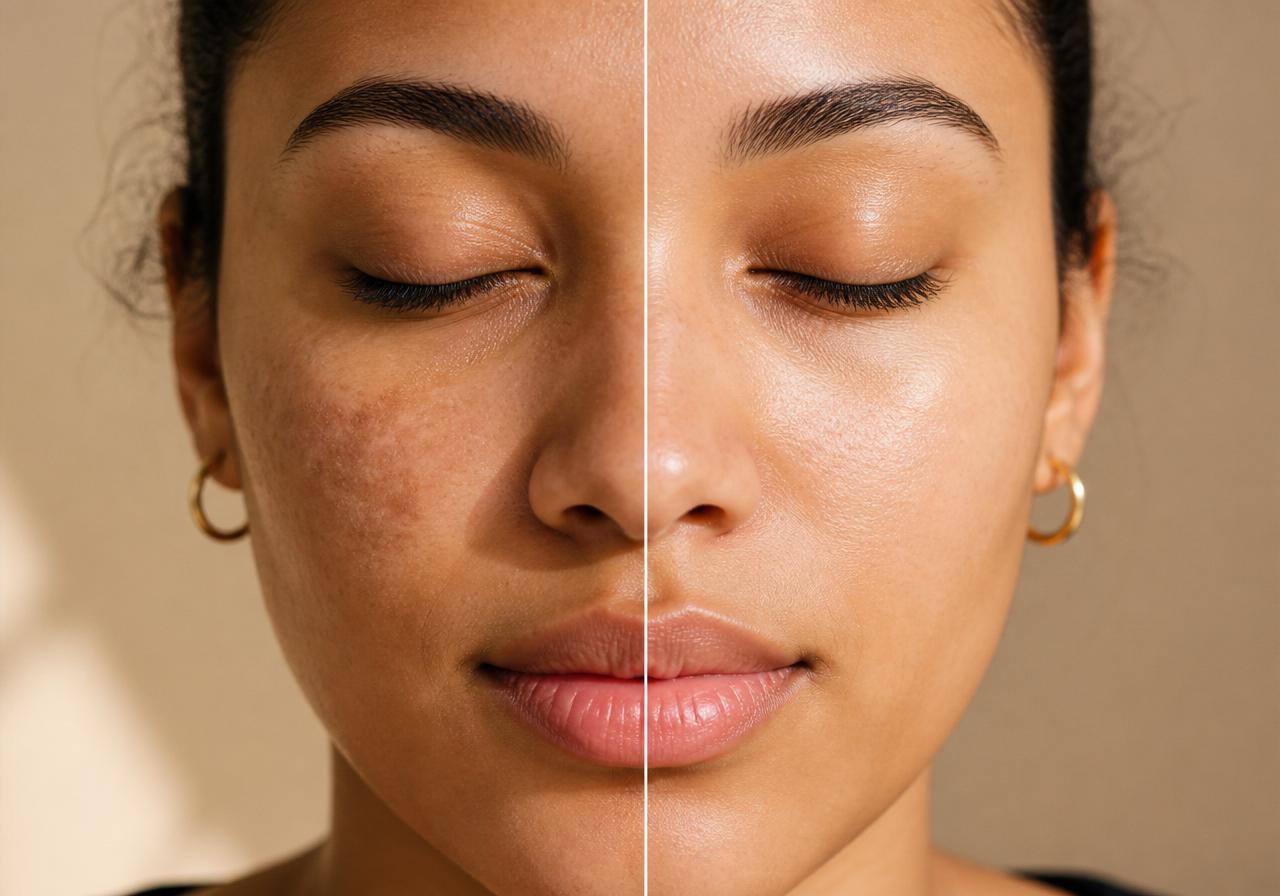
Hyperpigmentation occurs when certain areas of the skin produce more melanin, the pigment responsible for skin color. While melanin plays an essential role in protecting the skin from environmental stressors, excess production can leave behind dark patches or uneven tone long after the original trigger has disappeared.
Unlike acne itself, hyperpigmentation is not an active skin condition.
It is the visible result of your skin's repair process.
The Most Common Triggers
Acne & Breakouts
Inflammation caused by pimples signals pigment-producing cells (melanocytes) to increase melanin production. Result: Post-inflammatory hyperpigmentation (PIH).
UV Exposure
Sunlight activates melanin production. Without daily sun protection, existing dark spots often become darker and remain visible longer.
Skin Injury
Cuts, burns, insect bites, eczema, or irritation can all trigger excess pigment production during healing.
Hormonal Changes
Hormonal fluctuations may stimulate melanin production, contributing to uneven pigmentation.
Over-Exfoliation
Damaging the skin barrier through harsh exfoliation increases inflammation, making discoloration more likely and slowing recovery.
The Biology Behind Dark Spots
Hyperpigmentation develops through a series of natural biological processes.
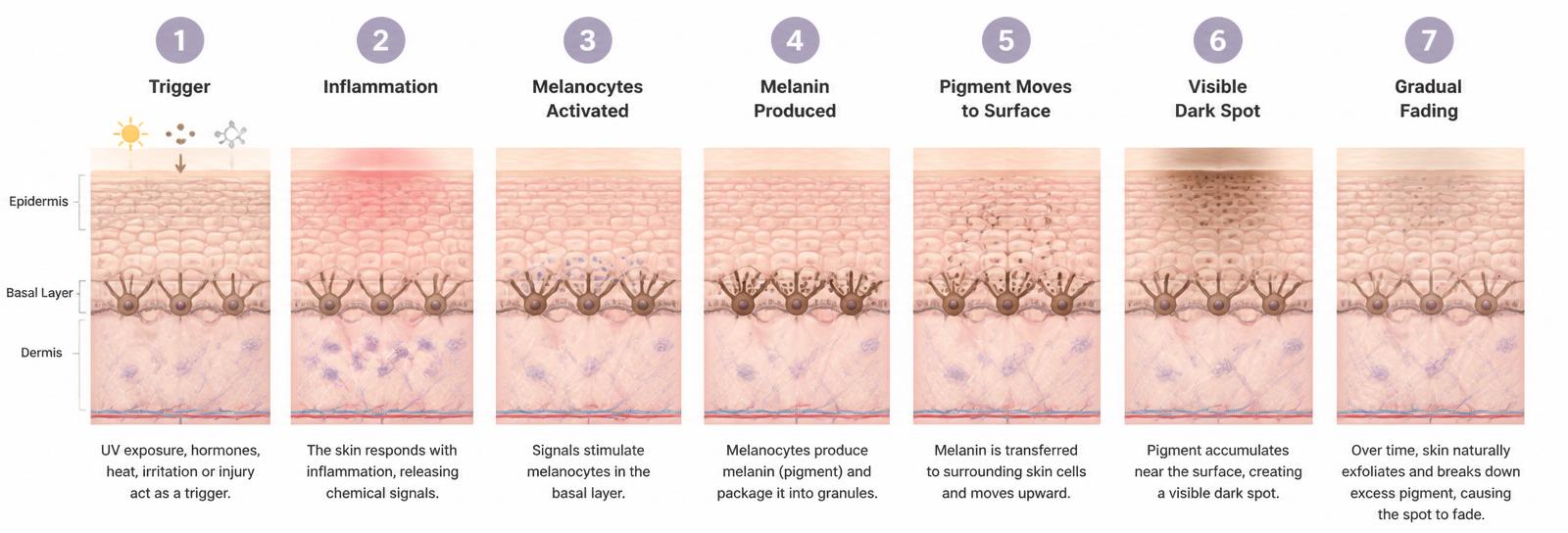
The intensity and duration of hyperpigmentation depend on several factors, including skin tone, sun exposure, inflammation, and overall skin health.
Why One Ingredient Usually Isn't Enough
Hyperpigmentation develops through multiple biological pathways.
Because of this, modern skincare often combines ingredients that work in different ways rather than relying on a single "hero" ingredient.
Instead of aggressively exfoliating the skin, a multi-pathway approach helps support a brighter, more even-looking complexion while maintaining skin health.
Three Ingredients We Chose for Sigma Radiance Nectar
Potassium Azeloyl Diglycinate
Helps visibly improve overall skin tone.
Derived from azelaic acid, Potassium Azeloyl Diglycinate is known for helping reduce the appearance of post-acne discoloration while supporting hydration and improving the look of uneven skin tone.
- ✓Helps improve visible brightness
- ✓Supports skin hydration
- ✓Gentle enough for regular use
N-Acetyl Glucosamine
Supports healthy skin renewal.
N-Acetyl Glucosamine is an amino sugar naturally found in the body. In skincare, it helps promote smoother-looking skin and works alongside other brightening ingredients to improve the appearance of uneven pigmentation.
- ✓Encourages healthy skin turnover
- ✓Helps visibly improve dullness
- ✓Supports a more even complexion

Tranexamic Acid
Targets the appearance of stubborn discoloration.
Tranexamic Acid has become one of the most respected cosmetic ingredients for addressing visible discoloration. It helps reduce the appearance of persistent dark marks by supporting a more balanced-looking complexion.
- ✓Helps visibly reduce discoloration
- ✓Supports overall skin clarity
- ✓Complements other brightening ingredients
The Fourth Ingredient Working Behind the Scenes
Lactobacillus Ferment Lysate
Healthy skin heals better.
That's why Sigma Radiance Nectar doesn't only focus on pigmentation. Lactobacillus Ferment Lysate helps support the skin microbiome and reinforces the skin barrier, creating an environment where skin can recover more effectively after inflammation.

Recovery Is More Than Brightening
At Camo Skin, we believe healthy-looking skin starts with supporting the skin's natural recovery process.
Rather than relying on harsh treatments, Sigma Radiance Nectar combines microbiome-conscious ingredients with advanced brightening technologies to help improve the appearance of post-acne marks while supporting a stronger, more resilient skin barrier.
Fade the look of post-acne marks
Brighten uneven skin tone
Support skin barrier health
Promote a more radiant complexion
Explore the Formula
A microbiome-conscious recovery serum formulated with Potassium Azeloyl Diglycinate, N-Acetyl Glucosamine, Tranexamic Acid, Diglycosyl Gallic Acid, and Lactobacillus Ferment Lysate to help visibly fade post-acne marks, brighten uneven skin tone, and support healthier-looking skin.
Discover Sigma Radiance Nectar